
Insights for Engineering Excellence

AI Scales Software Faster Than Teams Can Stay Aligned
Last week at the Infoshare conference, Jon Kern — co-author of the Agile Manifesto — and I opened the Tech Trends stage with a talk about how AI is changing software delivery, engineering organizations, and ultimately the meaning of agility itself.Last week at the Infoshare conference, Jon Kern — co-author of the Agile Manifesto — and I opened the Tech Trends stage with a talk about how AI is changing software delivery, engineering organizations, and ultimately the meaning of agility itself.
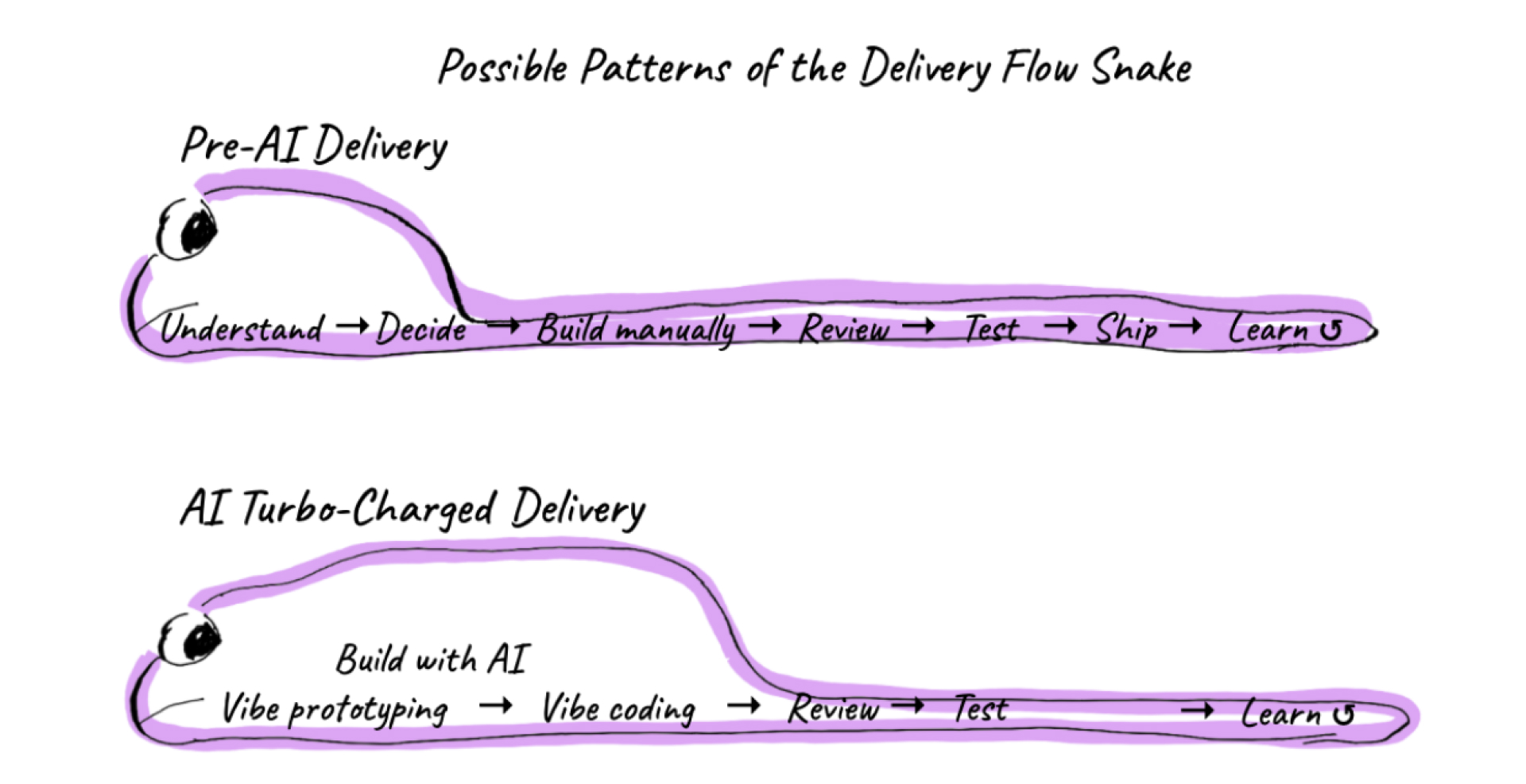
AI Does Not Fix Delivery. It Reveals How Your System Really Works
We can have faster and faster tools, and a slower and slower delivery system. And for quite a while, we may not even notice. Unless we use data that helps us understand how our delivery system really works. But let’s start from the beginning. To simplify: what would delivery look like if it were a snake?We can have faster and faster tools, and a slower and slower delivery system. And for quite a while, we may not even notice. Unless we use data that helps us understand how our delivery system really works. But let’s start from the beginning. To simplify: what would delivery look like if it were a snake?

Software Development Is a Team Sport—Especially in the AI Era
AI coding tools are everywhere. Many teams see faster local throughput: more code drafted, more ideas explored, less friction to start.AI coding tools are everywhere. Many teams see faster local throughput: more code drafted, more ideas explored, less friction to start.
When AI writes most of the code, engineering moves up the stack
From Uber’s agent stack to OpenAI’s small teams: the new operating model for engineeringFrom Uber’s agent stack to OpenAI’s small teams: the new operating model for engineering
The 70% → 80% Shift in AI Coding: Why VPs of Engineering Need to Manage Comprehension Debt
Last year, the dominant story was the “70% problem”: AI helps you get surprisingly far, surprisingly fast—but the final stretch toward production readiness becomes a grind of edge cases, debugging, and diminishing returns.Last year, the dominant story was the “70% problem”: AI helps you get surprisingly far, surprisingly fast—but the final stretch toward production readiness becomes a grind of edge cases, debugging, and diminishing returns.

DORA 2025: AI is an amplifier — the capabilities that decide whether it accelerates outcomes or chaos
When nearly everyone has access to similar models, competitive advantage comes from the system around the model: how your organization makes decisions, how work flows, how safely knowledge can be accessed, and how quickly you can validate outcomes.When nearly everyone has access to similar models, competitive advantage comes from the system around the model: how your organization makes decisions, how work flows, how safely knowledge can be accessed, and how quickly you can validate outcomes.

AI Didn’t Reduce Engineering Work — It Moved the Bottlenecks
How to Turn Faster Coding into Faster Shipping: Delegation, Verification, DevEx DataHow to Turn Faster Coding into Faster Shipping: Delegation, Verification, DevEx Data

When AI Makes Coding Fast, Delivery Gets Slow
How VPEs Break the “AI Paradox” with Orchestration and DevEx SignalsHow VPEs Break the “AI Paradox” with Orchestration and DevEx Signals

AI to the Rescue? Addressing the Digital Collaboration Debt Crisis
AI is often depicted as a double-edged sword, eliciting both excitement and fear. A study by Microsoft, which surveyed 31,000 people globally, reveals a nuanced perspective on the future of work with AI.AI is often depicted as a double-edged sword, eliciting both excitement and fear. A study by Microsoft, which surveyed 31,000 people globally, reveals a nuanced perspective on the future of work with AI.

